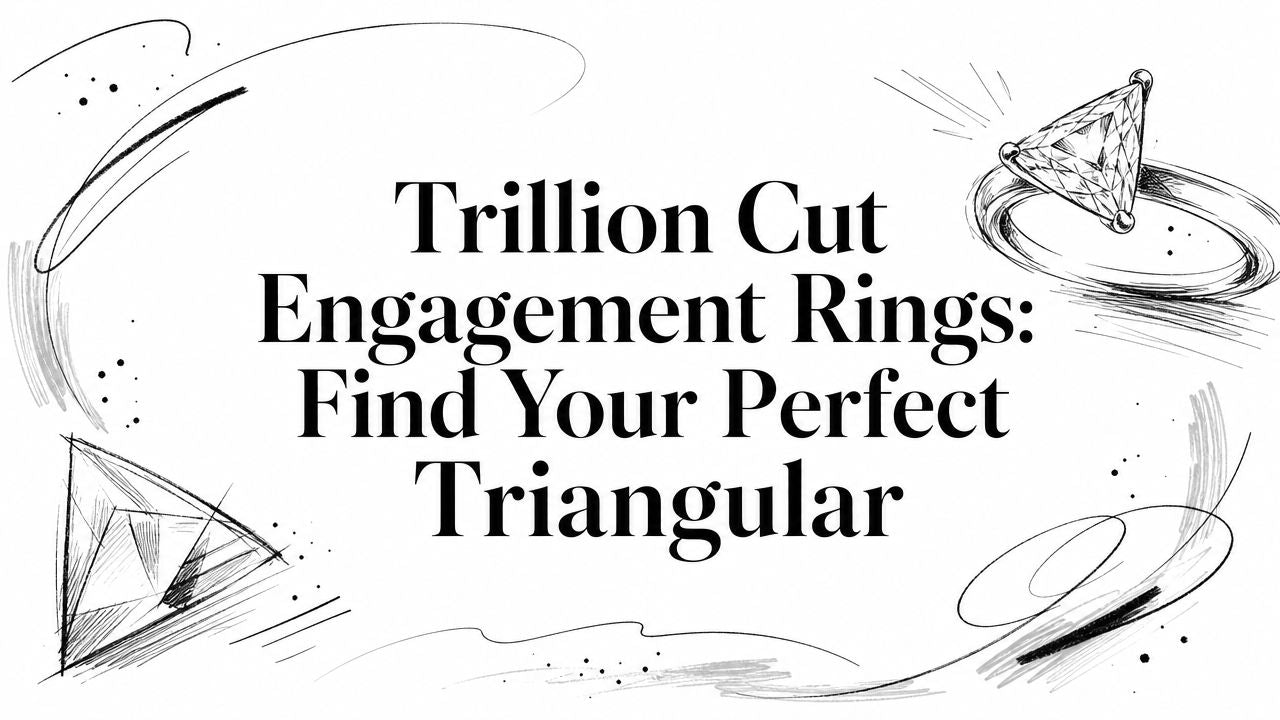
Trillion Cut Engagement Rings: Find Your Perfect Triangular
Most engagement ring advice is boring on purpose. It keeps pushing round and princess cuts like your only job is to blend in, keep it safe, and copy a display case that hasn't changed in years. That's lazy advice.
If your style leans hip-hop, streetwear, and clean flex, trillion cut engagement rings hit different. The shape is sharper. The look is louder. The whole ring feels more like jewelry with intent, not just tradition on autopilot. A triangular stone has edge. It looks designed, not default.
I'm going to be blunt. If you want soft and expected, buy round. If you want a ring that looks modern, icy, and a little dangerous in the best way, go trillion. The right one has presence from across the room and detail up close. If you're still sorting your overall direction, this guide on how to choose an engagement ring style is a useful starting point.
Why Trillion Cut Rings Are a Power Move
A trillion cut ring doesn't whisper. It points.
That triangular profile gives you instant attitude. Round stones are classic, sure. Princess cuts are clean. But a trillion cut comes with lines that feel closer to modern architecture, sneaker design, and custom pendants than old-school bridal jewelry. That's why it lands so well for people who care about silhouette, proportion, and visual punch.
The shape does the talking
Streetwear has always been about sharp choices. Not more pieces. Better pieces. A trillion stone fits that mindset because the geometry already creates tension and motion. It doesn't need a bunch of extra decoration to get attention.
A good trillion ring looks:
- More directional: The corners pull the eye outward and make the ring feel aggressive in a polished way.
- More graphic: Triangles read bold. That matters when your style already includes strong shapes, layered chains, and standout footwear.
- Less predictable: People expect round. They remember triangular.
Style rule: If your jewelry rotation already includes Cuban links, tennis pieces, or a statement watch, a trillion ring will usually look more intentional than a soft traditional cut.
It fits the iced-out mindset better
Hip-hop jewelry isn't about being subtle. It's about clarity of taste. Every piece should look chosen.
That's where trillion cut engagement rings earn their spot. They give you a center stone that feels custom even when the ring design is simple. You can run a plain band and still get impact because the stone shape is already doing heavy lifting. That's a smart move. More presence, less clutter.
And yes, that matters if you want a ring that can sit next to streetwear without looking out of place. A trillion cut doesn't get swallowed by a stacked wrist or a layered neck. It holds its own.
Understanding the Trillion Cut Geometry
The trillion cut works because the geometry is disciplined. Three sides. Three corners. Strong symmetry. No wasted motion.
That sounds technical, but the effect is simple. The stone looks crisp, bright, and modern. Where a round cut feels fluid, a trillion feels engineered. Think of the difference between a classic sedan and a sharp-bodied supercar. Both can be beautiful. Only one looks like it was built to stop traffic.

What gives it that flash
The cut is also called trilliant. It dates back to the 18th century and the work of the Asscher brothers, and the name “Trilliant” was trademarked in the 1960s. These stones are typically cut with 31 or 50 facets, which is a big reason they throw off that hard sparkle and can look larger face-up than their carat weight suggests, according to this trillion cut diamond guide from Clean Origin.
That facet layout matters. A trillion isn't flashy by accident. The cut is built to bounce light across a broad triangular face, so it reads bright and wide when you look down at your hand.
Symmetry is everything
This is not a forgiving shape. A round can hide a lot. A trillion can't.
If one side looks off, you'll see it. If one corner feels heavier than the others, the whole ring loses its tension. That's why the best trillion stones feel balanced from every angle. The outline should look clean, and the center should feel aligned, not lopsided.
Here's what to pay attention to:
- Even sides: The triangle should feel balanced, not stretched weirdly.
- Clean corners: The points should look deliberate, not bulky.
- Strong face-up presence: The stone should read wide and bright from the top view.
- Controlled depth: Too deep and it can lose some of that broad visual effect. Too shallow and the look can get weak.
A trillion cut is one of those shapes where precision isn't a bonus. It's the whole game.
Why it feels current
People call the trillion cut modern, but it isn't some brand-new trend. It has history. What changed is how people wear it.
For a long time, many jewelers used trillion stones more as accents than as the star. Now the center-stone version makes sense for buyers who want something less bridal-catalog and more fashion-aware. That shift is why the cut feels so fresh today. It mixes old craftsmanship with a silhouette that still looks ahead of the room.
Diamond Versus Moissanite The Smart Choice
Let's kill the tired argument first. This isn't “real versus fake.” That framing is outdated and usually pushed by people trying to sell status anxiety.
A key decision is tradition versus value. If you want the classic prestige story, you'll lean diamond. If you want maximum shine, larger visual impact for your money, and a ring you can wear hard without feeling reckless, moissanite makes a lot of sense. For a deeper side-by-side breakdown, check this moissanite vs diamond comparison.
What matters for this cut
Trillion shapes are visual by nature. You notice them fast. That means your stone choice should match the whole point of the ring.
If your goal is a clean luxury piece with heritage attached to it, diamond stays in the conversation. If your goal is an iced-out look with big flash and less money tied up in one stone, moissanite is the practical play.
Here's the quick read.
| Feature | Diamond | Moissanite |
|---|---|---|
| Brilliance | Crisp, classic sparkle | Very bright, high-fire look |
| Hardness | Strong for everyday wear | Strong for everyday wear |
| Price | Higher cost, especially as size and quality climb | More budget-friendly for a larger visual look |
| Style vibe | Traditional luxury | Smart flex |
| Best for | Buyers who want heritage and convention | Buyers who want bold shine and value |
My recommendation
For those shopping with a streetwear mindset, moissanite is the smarter buy. Not because diamond is bad. Instead, shoppers often prefer not to pay extra just to satisfy a rulebook they never agreed to.
A trillion cut already looks uncommon. Pair that with moissanite and you can lean into the whole purpose of the shape. More flash. More face-up drama. More room in the budget for a stronger setting, better metal choice, or matching pieces.
That's the key. Don't spend all your budget proving a point nobody asked you to prove.
When diamond still makes sense
Diamond is still the move if you know you want natural material and that matters to you personally. Not for validation. For your own preference.
Pick diamond if:
- You care about legacy: Some buyers want the traditional gemstone, full stop.
- You want a quieter shine: Diamond often reads a little more restrained than moissanite.
- You're building a fine-jewelry collection: If this ring is part of a larger long-term jewelry plan, diamond may fit that strategy.
Buying advice: If you're choosing between a smaller diamond and a stronger-looking moissanite in a trillion cut, I'd usually take the better visual result.
The wrong way to shop is to follow old jewelry snob logic. The right way is to match the stone to the look you want.
Protect Your Investment With the Right Setting
A trillion stone can look cold-blooded in the best way. It can also chip if the setting is sloppy.
That's not a design flaw. It's the reality of pointed geometry. The three tips are the vulnerable spots, especially when the stone is the center of the ring. Natural diamond guidance specifically recommends protecting those corners with secure settings, as explained in this trillion cut engagement ring guide from Natural Diamonds.

The non-negotiable part
If you buy a trillion ring without corner protection, you're gambling.
The shape looks sharp because it has three pointed ends. Those same points take the hit first when your hand catches a hard surface, clips a countertop, or knocks against gym equipment, doors, luggage, or steering wheels. That's why the setting matters as much as the stone.
Your safest moves are:
- V-prongs: These cap the points and protect the tips while still letting the shape show.
- Full bezel settings: These wrap the outer edge in metal and give the strongest overall protection.
- Well-balanced construction: The stone should sit secure, not wobble or look exposed at the corners.
V-prong versus bezel
A V-prong setting is the cleaner flex if you want the shape visible. You still get that crisp triangular outline, but each point has a metal cap doing real work. This is usually the move if you want brilliance and edge without making the ring look too armored.
A bezel setting is for people who live in their jewelry. It frames the stone, makes the geometry feel even more graphic, and gives the corners more coverage. It can look especially strong in yellow gold or silver-toned metal because the outline becomes part of the design.
If you want a quick visual on how protective metal choices affect wear, this guide on the best metal for jewelry is worth reading.
Don't buy a trillion center stone in a flimsy setting just because the top view looked good in a product photo.
What to inspect before you commit
A lot of buyers stare at the stone and ignore the engineering. That's backwards.
Check these details:
- Corner coverage. Are all three points protected in a way you can clearly see?
- Seat and alignment. Does the stone sit balanced, or does one side look higher?
- Band stability. Is the band substantial enough to support the head of the ring?
- Daily wear reality. Does the design fit how you move, work, and use your hands?
Here's a useful visual reference before you lock anything in.
A beautiful trillion ring should look sharp and wear smart. If it only does one of those, keep shopping.
Styling Your Trillion Ring The Iced-Out Way
The trillion cut separates itself from standard engagement-ring energy. It doesn't just sit there and symbolize commitment. It becomes part of the fit.
The triangular shape has movement. It catches light differently from softer cuts, and it looks right at home with the visual language of hip-hop jewelry. Sharp lines, polished surfaces, contrast, repetition. If you know how to style chains, pendants, and a watch stack, you already understand why this cut works.
Build the look around geometry
A trillion ring looks strongest when the rest of your jewelry supports the same attitude. Don't throw random pieces at it. Build around form.

Here's a clean formula:
- Ring plus Cuban link bracelet: The broad links balance the triangular pointiness with weight.
- Ring plus tennis chain: Good if you want a brighter, more refined iced look.
- Ring plus statement pendant: Works best when the pendant has crisp edges or a strong silhouette.
- Ring plus watch: Keep the case and bracelet finish aligned with the metal tone of the ring.
Two ways to wear it
One look is polished and lean. The other is full pressure.
Look one: quiet flex
Plain or minimal band. Trillion center stone. One tennis bracelet. One chain. Clean watch. This works if your clothes already do enough, like a heavyweight hoodie, stacked denim, and fresh sneakers. The ring becomes the detail that changes the whole outfit.
Look two: full iced rotation
Trillion ring with a bolder wrist stack, Cuban chain, and pendant. This look needs control. Match tones. Keep the stones consistent. Let the ring either mirror the rest of the shine or act as the sharp centerpiece that breaks up all the round sparkle around it.
The best styled ring doesn't look separate from the outfit. It looks like it belongs to the same language.
Metal matching matters more than people admit
If the ring is silver-toned, don't muddy the look with warm yellow pieces unless you know how to mix metals on purpose. If the ring is yellow gold, commit enough to make it look intentional.
A trillion cut already stands out. You don't need chaos around it. You need alignment:
- White-toned setup: cleaner, frostier, more futuristic.
- Yellow-toned setup: warmer, richer, more old-money-meets-rap-video.
- Mixed setup: only if one tone clearly leads and the other supports.
One factual example in the market is VVS Jewelry's “The Signature Trillion Engagement Ring in Plain Standard Band,” a solitaire design built around a trillion-shaped center stone. That kind of straightforward layout works because the cut itself already brings enough style.
Don't over-stack the hand
A common mistake occurs when people buy a distinct center ring, then add too many competing rings next to it.
A trillion piece needs breathing room. If you stack, keep the neighboring bands cleaner and lower-profile. Let the center shape stay obvious. The goal isn't to crowd the hand. The goal is to make the hand look expensive.
Finding the Perfect Fit and Metal
A trillion ring can flatter a hand fast, but only if the size and metal make sense together. The broad face of the stone gives a lot of visible presence, so you don't need to overcompensate with a clunky band or awkward proportions.
If you have shorter fingers, the triangular spread can help create a longer visual line. If you have longer fingers, the shape can add width and punch without looking heavy. That's why this cut works across a lot of hand types. It's graphic, but it doesn't have to feel bulky.
How the fit should feel
Your ring should stay secure without turning into a vice. If it spins constantly, the top view won't sit right, and that matters more with a directional shape like this one. If it's too tight, daily wear gets annoying fast.
Use common sense:
- Go for stability: The triangle should face properly most of the time, not roll around all day.
- Think about stacking: If you plan to wear a band next to it, leave room for that reality.
- Respect your routine: If your fingers swell during the day, don't choose a fit that only works when your hands are cold.
Choosing between sterling silver and vermeil
For the VVS-style buyer, two metal categories come up a lot: 925 sterling silver and gold vermeil.
Sterling silver is the crisp, icy option. It gives that bright white look people want when they're chasing a colder aesthetic. It pairs naturally with moissanite and works well if your everyday rotation includes silver-toned chains, watches, and bracelets.
Gold vermeil gives you the warmer luxury effect without jumping straight into higher-cost solid gold territory. If your style leans toward yellow metal, vermeil gets you that richer color that plays well with Cuban links, pendants, and heavier statement pieces.
My take on which metal to choose
Pick sterling silver if your whole setup is clean, bright, and modern. It feels sharper with the trillion shape.
Pick vermeil if you want the ring to read more opulent. Yellow tones can make the triangular outline feel bolder and more fashion-driven, especially with a bezel or stronger prong presence.
Practical pick: Match your ring metal to the jewelry you already wear most. Don't build a ring in isolation and then wonder why it fights your daily stack.
The wrong move is choosing metal based only on trend. The right move is choosing the finish that makes the ring look native to your style.
Caring For Your Trillion Cut Ring
If you bought a trillion ring for sparkle, then take care of it like you meant it. Dirt kills shine fast. Lotion, soap film, sweat, dust, and daily grime will turn a sharp stone into a dull one if you ignore it.
The good news is maintenance doesn't need to be complicated.
The simple cleaning routine
Use warm water, mild soap, and a soft-bristled brush. That's enough for routine cleaning. Brush around the stone, under the setting, and around the parts where buildup likes to hide.
Then rinse carefully and dry with a soft cloth. Don't scrub like you're sanding a floor. Be gentle around the setting, especially near the points.
What to stop doing
A lot of ring damage comes from normal bad habits, not freak accidents.
Avoid these:
- Harsh chemicals: They can mess with metal finishes and leave your ring looking tired.
- High-impact wear: Take the ring off for lifting, contact sports, rough work, or anything where your hands take hits.
- Careless storage: Don't toss it into a drawer with other jewelry where the stone and metal can get knocked around.
- Blind trust in machines: If you use stronger cleaning methods, know your setting first. Some setups need a gentler approach.
Keep the setting under watch
This part matters with a trillion ring more than people think. The stone shape makes the corners important, so pay attention to how secure the setting feels over time. If anything looks loose, uneven, or snag-prone, stop wearing it until a jeweler checks it.
A clean ring shines harder. A secure ring lasts longer. You need both.
If you want a piece that fits the iced-out lane without losing shape, proportion, and wearability, start with a trillion cut and build the rest with intention. Browse VVS Jewelry if you want to explore hip-hop jewelry, moissanite pieces, chains, rings, watches, and streetwear that match that same sharp, high-impact energy.